Solid Waste Management
Solid waste management (SWM) continues to dominate as a major societal and governance challenge,
especially in urban areas overwhelmed by the high rate of population growth and garbage generation. The role of SWM in achieving sustainable development is
emphasized in several international development agendas, charters, and visions. For example, sustainable SWM can help meet several United Nations’ Sustainable
Development Goals (SDG), such as ensuring clean water and sanitation (SDG6), creating sustainable cities and inclusive communities (SDG11), mitigating climate change (SDG13), protecting life on land (SDG15),
and demonstrating sustainable consumption and production patterns (SDG12) https://sdgs.un.org/goals, accessed on 26 September 2022). It also fosters a circular urban economy that promotes reductions
in the consumption of finite resources, materials reuse and recycling for waste elimination, pollution reduction, cost saving, and green growth
However, coupled with economic growth, improved lifestyle, and consumerism, cities across the globe will continue
to face an overwhelming challenge of SWM as the world population is expected to rise to 8 billion by 2025 and to
9.3 billion by 2050, out of which around 70% will be living in urban areas. In developing countries, most cities
collect only 50–80% of generated waste after spending 20–50% of their budgets, of which 80–95% are spent on collecting and
transporting waste. Moreover, many low-income countries collect as low as 10% of the garbage generated in suburban areas,
which contributes to public health and environmental risks, including higher incidents of diarrhea and acute respiratory infections among people,
particularly children, living near garbage dumps.
Obstacles to effective municipal SWM include lack of awareness, technologies, finances, and good governance.
Removing garbage from homes and businesses without greater attention to what was then carried out with it has also been the
priority of municipal SWM in several cities of developing countries . In most developing countries, garbage collected from households
is disposed of in landfills or dumpsites, the majority of which are projected to reach their capacities within a decade. The unsustainable
approach of dumping or burning waste in an open space, usually near poor communities on the city edge, or throwing garbage into water bodies
was an acceptable garbage disposal strategy. Similarly, several cities still use old-generation or poorly managed facilities and informal uncontrolled
dumping or open-air waste burning. Often, these practices affect marginalized social groups near the disposal sites . Moreover, this approach poses several
sustainability problems, including
resource depletion, environmental pollution, and public health problems, such as the spread of communicable diseases.
However, ever since the advent of the environmental movement in the 1960s, there has been a far-reaching appreciation of environmental and public
health risks of unsustainable SWM practices. In the 1970s and onward, SWM was a technical issue to be resolved using technology; hence, the emphasis
and investments were placed on garbage collection equipment. Although modern technology can significantly reduce emissions of hazardous substances, by the 1990s,
that viewpoint changed when municipalities become unable to evacuate and dispose of garbage effectively without the active involvement of service users and other stakeholders.
The inability of the public sector in the global South to deliver sufficient improvement of SWM, coupled with the pressure from the financial institutions and other donor agencies,
led to privatization policies at the end of the decade. However, as privatization failed to provide
municipal SWM services to the poor and marginalized communities, the current global thinking on addressing municipal SWM problems is changing.
A more sustainable waste management approach prioritizes practices such as reduced production, waste classifications, reuse, recycling, and energy recovery
over the common practices of landfilling, open dumps, and open incineration. This approach, which is still at an early stage but getting increased attention
in the Global South, is more inclusive and environment-friendly and has less negative impact on human health and the environment than the common practices.
As such, there is a need to assess SWM practices in the Global South and their impacts on environmental and human health because 90% of the expected growth
in the urban population by 2050 is expected to happen here. So far, there are a few studies on the impacts of SWM practices on human health and the environment in the global regions.
Importance in waste management
In communities where appropriate sites are available, sanitary landfills usually provide the most economical option for disposal of nonrecyclable refuse. However,
it is becoming increasingly difficult to find sites that offer adequate capacity, accessibility, and environmental conditions. Nevertheless, landfills will always play a key
role in solid-waste management. It is not possible to recycle all components of solid waste, and there will always be residues from incineration and other treatment processes that will
eventually require disposal underground. In addition, landfills can actually improve poor-quality land.
In some communities properly completed landfills are converted into recreational parks, playgrounds, or golf courses.
Landfill
Recycling
Open burning of waste
Reuse
Biogas
Separating, recovering, and reusing components of solid waste that may still have economic value is called recycling. One type of recycling is the recovery and reuse of heat energy, a practice discussed
separately in incineration. Composting can also be considered a recycling process, since it reclaims the organic parts of solid waste for reuse as mulch or soil conditioner. Still other waste materials have
potential for reuse. These include paper, metal, glass, plastic, and rubber, and their recovery is discussed here.
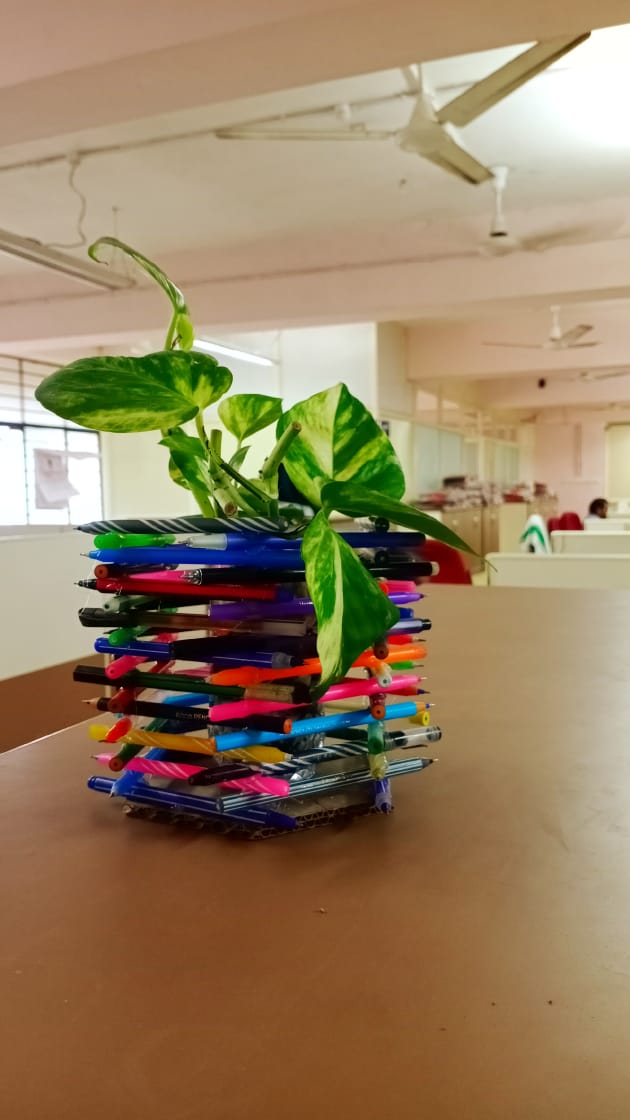
Reuse
Recovered broken glass can be crushed and used in asphalt pavement. Colour-sorted glass is crushed and sold to glass manufacturers as cullet, an essential ingredient in glassmaking. steel cans are baled
and shipped to steel mills as scrap, and aluminum is baled or compacted for reuse by smelters. Aluminum is one of the smallest components of municipal solid waste, but it has the highest value as a recyclable
material. Recycling of plastic is a challenge, mostly because of the many different polymeric materials used in its production. Mixed thermoplastics can be used only to make lower-quality products, such as “plastic lumber.”
In the paper stream, old newspapers are sorted by hand on a conveyor belt in order to remove corrugated materials and mixed papers. They are then baled or loose-loaded into trailers for shipment to paper mills, where they are reused
in the making of more newspaper. Mixed paper is separated from corrugated paper for sale to tissue mills. Although the processes of pulping, de-inking, and screening wastepaper are generally more expensive than making paper from virgin wood fiber,
the market for recycled paper has grown with the establishment of more processing plants.
Rubber is sometimes reclaimed from solid waste and shredded, reformed, and remolded in a process called revulcanization, but it is usually not as strong as the original material. Shredded rubber can be used as an additive in asphalt pavements and artificial
turf and is also sold directly as an outdoor mulch. Discarded tires may be employed as swings and other recreational structures for use by children in “tire playgrounds.”
In general, the most difficult problem associated with the recycling of any solid-waste material is finding applications and suitable markets. Recycling by itself will not solve the growing problem of solid-waste management and disposal.
There will always be some unusable and completely valueless solid residue requiring final disposal.